A good floor plan feels effortless. You can host a birthday party without bumping into a half wall, tuck a sleeping toddler away from the noise, take a video call when the dishwasher is running, and welcome your parents for a month without stepping over suitcases. That ease is not luck. It comes from dozens of decisions that anticipate change, and from the discipline to privilege flexibility over one-off showpieces.
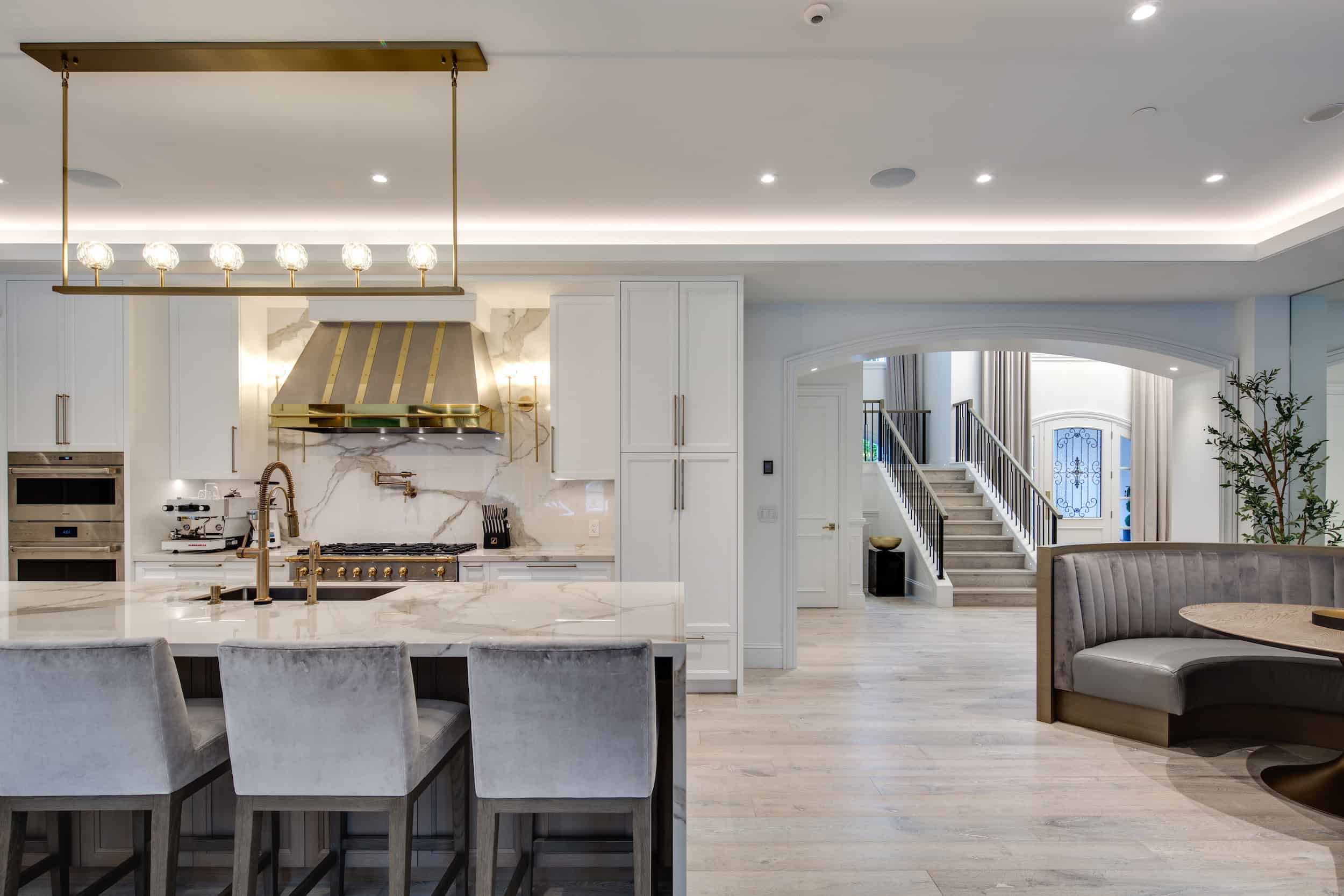
I have walked clients through model homes where the foyer looked like a luxury hotel, yet there was nowhere to store a stroller. I have also stood in 1,900 square feet that lived like 2,400 because the walls, doors, and services were placed with intention. Families change. Jobs shift. Health shifts. Kids come home again. Designing for flexibility is not about predicting the future perfectly. It is about building a home that can meet three or four different futures without a gut renovation.
How families actually use space
When I sit with a new family, I do not start with bedroom counts. I ask how they live from 6 a.m. To 10 p.m. Do they cook every night or batch on Sundays. Do they host often. Where do shoes collect. Who needs quiet, and when. Over time, certain patterns repeat.
Hybrid work is not a trend line, it is https://eduardonmiv237.theburnward.com/renovations-that-improve-accessibility-and-aging-in-place-1 a reality. In the past three years, more than half the clients I meet need dedicated focus space during the day that can behave as a guest room on weekends. Many care for an aging parent at least part of the year. Teenagers want independence but still wander to the kitchen for conversation. Dogs and gear multiply. A flexible layout respects these rhythms and leaves room for the messy parts.
From a builder’s standpoint, a custom home that adapts gracefully tends to hold value better. A Real estate developer thinks about exit strategy, and families should too. A plan that suits a wider array of buyers, or can be modestly adapted to create rental income, affects resale and financing options. That is where smart structural grids, service cores, and subtle separations of space pay dividends.
The core principles of adaptable planning
The best Custom Homes that I have worked on share a few ingredients. They are simple to describe and hard to execute without discipline.
Zones with choices, not dead ends. Circulation that loops allows people to move without collisions. A back hall that connects mudroom to pantry to kitchen, separate from the main living path, reduces congestion and noise.
Wet walls consolidated, not scattered. Stack bathrooms and align kitchens, laundries, and mechanical chases. This does two things. First, it simplifies Maintenance for the life of the house. Second, it makes future Renovations efficient, because rough plumbing and vents are where you need them.
Structure that does less but spans more. A clean structural grid, often 16 or 20 feet on center with beams sized accordingly, opens options. Removing a non-structural wall later to join rooms is cheap. Moving a post is not. When a Custom home builder sizes beams upfront for potential open plans, you buy an option on flexibility for a few thousand dollars instead of tens of thousands later.
Layers of privacy. Picture a gradient from public to private. Porch, foyer, living spaces, then a pocket door or short hall that signals you are entering the quiet zone. That layer can be as light as a cased opening, but it needs to exist so you can entertain while a baby naps, or your partner sleeps between shifts.
Daylight from more than one side. Rooms lit from two directions feel larger and tolerate more uses. A study that gets morning light serves well as a yoga room. The same square footage with a single small window becomes a cave.
Rooms that switch roles without apology
Ask a room to do two things, and it will do none well if you do not tune the details. Ask a room to do two things, and it will do both if the details are right.
The flex room near the entry is a common battleground. If it is truly a guest room, it needs a real closet and a door that closes, ideally with acoustic seals. If it is truly an office, it needs built-in storage at standing and sitting heights, and the door should sit a half bay back from the living area so you are not on display during a call. Split the difference. I like to place a floor outlet in the middle third of the room for a floating desk, install a queen sized wall bed with cabinetry that reads like a bookcase, and size an adjacent full bath with a curbless shower. Everyday it behaves as an office. On Friday night you pivot a panel, and by the time the sheets are on the bed, the space reads as a legitimate guest suite.
Kitchens carry more weight than any other room. The mistake is to create a single, museum-like volume that cannot flex. A working pantry behind the kitchen solves most of the contradictions. Keep the main kitchen calm and social. Hide the real work in a back pantry with a second sink, an undercounter freezer, and storage for small appliances. When your teenager is frying eggs at midnight, they can do it without waking the house. When you cater a big holiday, you have staging space. Pro tip from Maintenance experience, specify drains with cleanout access in pantry and kitchen sinks, and align them on the same wet wall. Future clogs become simple service calls.
Garages and mudrooms are not glamorous, but they make or break daily peace. A garage one bay deeper than the car footprint costs a small fraction more and gives you a workbench, bike storage, or a freezer without touching living space. A mudroom that holds everyday life prevents the kitchen from becoming a dumping ground. That mudroom, if it also links to a side entrance, becomes a private entry for an in law suite when needed.
Services that let you reconfigure
The invisible decisions define how easily a home evolves. Mechanical, electrical, and plumbing planning is where a Custom home builder earns their fee.
Think in zones for heating and cooling, not just floors. A two story house works better with at least three HVAC zones, including one that serves a potential suite. If you anticipate finishing a basement, run oversized trunk lines and leave space for a second air handler, even if you install it later. Pull home runs for data to at least six locations beyond where you think you need them, and include two in the garage for future tools or an EV charger. Place subpanels with spare capacity where they can serve additions without tearing up finished spaces.
Sound is the most overlooked service. Resilient channels on bedroom ceilings, rockwool in interior walls that flank living spaces, and solid core doors are modest costs that create quiet. I have opened up walls in six year old homes to retrofit sound attenuation because the original plan did not anticipate an office next to a playroom. Doing it right once is cheaper.
Bathrooms are a pivot point. A powder room near the main living area is nice. A small full bath tucked at the back of the house is gold. When you need to quarantine a sick family member, host a long term guest, or create a quick in law suite, that full bath turns a flex room into a proper bedroom. Keep the shower curbless with a linear drain, and you have also laid groundwork for aging in place.
Storage that follows how you live
Cabinetry and closets can be a trap. Towering built-ins look impressive but lock you into a single use. I like a mix of architectural storage and furniture grade pieces. A long, shallow storage wall along a hall eats coats, backpacks, and craft bins without stealing much floor area. A storage loft over a hallway or mudroom is a small structural trick that swallows holiday decor. In bedrooms, design at least one closet with adjustable shelving from floor to ceiling, not a double hang rod by default. Families with young kids need bins and toy rotation. Teenagers need tall hanging for coats and uniforms. Later, that same closet can store linens for a nearby bath.
The indoor outdoor hinge
Outdoor space extends living area on mild days, and it can serve as a pressure valve for big households. The patio or deck works best when it is one step down from the main floor, wide enough for circulation behind chairs, and shaded in the hottest hours. A covered porch adjacent to a flex room effectively doubles that room’s utility. On projects with a walk out lower level, I like a small patio aligned with a separate entrance to a potential suite. This creates a sense of independence that families value when adult children come home or grandparents visit.
Outdoor kitchens are fun, but a modest gas stub, hose bib, and weather protected outlets cover 90 percent of needs. Keep the number of penetrations through the building envelope low, and align them with the interior wet wall for simpler Property maintenance.
Planning for aging in place without telegraphing it
No one loves a house that looks like a clinic. The trick is to bake in accessibility without shouting it. A no step entry from the garage through the mudroom. A main floor room sized to take a queen bed with at least 36 inches of clear space around it. Blocking in walls for future grab bars at toilets and showers. Lever handles everywhere. These costs are minor, and when you suddenly need them, they are priceless.
Stairs do not have to be the enemy. A straight run with a landing halfway up is easier to retrofit with a lift than a tight winder. If you are building new, space the stringers to accept a future chair lift bracket and account for outlet placement at the top and bottom. None of this detracts from daily beauty. It simply keeps options open.
Multi generational living and income options
More families are considering combinations that would have seemed unusual twenty years ago. A parent moves in for a season. A college graduate returns to save for a down payment. In some municipalities, an accessory dwelling unit is allowed that can be rented long term or used by family.
A thoughtful Multi-Family mindset, even in a single family home, leads to simple choices that expand use. A second laundry rough in, stacked in a closet or tucked in a pantry, means independence for a suite. A small kitchenette with a microwave drawer and undercounter fridge meets most day to day needs. An exterior door placed in the right spot converts an everyday back hall into a private entry. The cost difference in roughing these in during initial construction is small compared to cutting into finishes later.
Regulations vary, so check zoning early. Some towns allow internal apartments but not detached ADUs. Others require an owner occupant affidavit. An Investment Advisory professional who understands local rental markets can help you stress test the plan. I have seen families offset 20 to 40 percent of their mortgage with a legal suite, but that range depends on neighborhood, finishes, and whether you plan for short or long term tenants. Good design improves tenant quality, which in turn helps with Maintenance and wear.
Here is a quick readiness checklist I use when a family is open to a future suite or ADU:
- Verify zoning and building code for internal apartments and ADUs, including parking and egress. Align plumbing stacks and electrical subpanels to serve a discrete zone without crossing main living areas. Provide a door location that can be secured to separate the suite, with sightlines that protect privacy on both sides. Rough in for a compact laundry and kitchenette, even if you cap lines for now. Consider sound attenuation and independent HVAC controls for comfort and resale.
Three projects that illustrate the choices
A 2,150 square foot home on a narrow lot. The couple both worked from home, and they wanted a music room. We placed a front flex room set back half a bay from the living area, added a floor outlet, and used a wall bed flanked by acoustic cabinets. Behind the kitchen, a working pantry handled the messy tasks. A sliding pocket door created a quiet zone for two bedrooms and a bath. The HVAC included three zones and a fourth capped for a future finished lower level. They later used the flex room as a nursery without moving a single outlet. Cost premiums for flexibility, mostly structure and services, added roughly 2 to 3 percent to the build.
A 3,000 square foot home for the sandwich generation. Their parent visited for three months a year. We tucked a full bath with a curbless shower at the back of the main floor and widened hallways to 42 inches. A side entry to the mudroom created a dignified path that did not cut through the main living space. The parent’s room connected to the covered porch, which extended the sense of private domain. We sized a future elevator shaft as a pair of stacked closets, framed at 5 by 5 feet, and roughed power to both. The elevator never came to be. The closets turned into the house’s most fought over storage. When the parent no longer traveled, that room became a library with the wall bed hidden behind panels.
An urban infill with a legal basement suite. The city allowed an internal apartment if egress and parking were met. The main house was 1,800 square feet above grade, with a 700 square foot garden level unit. We ran a separate exterior stair to a small patio, placed the mechanicals in a service corridor that both units could access without entering the other, and used a shared laundry with lockable doors on each side. The custom millwork in the main kitchen was restrained to conserve budget for durable finishes in the rental. The family covered about 35 percent of their mortgage with the unit. Wear on shared entries was heavy. We specified easy to replace porcelain tile and a paint that could be scuffed and touched up quickly. Property maintenance simplified because the wet walls were stacked, and the electrician had left 30 percent spare capacity in the subpanel.
New build, renovation, or careful restoration
Not everyone starts with bare dirt. A smart Renovation can create adaptability without erasing a home’s soul. In postwar houses with chopped up rooms, removing two or three non-structural walls and inserting a larger cased opening can create sightlines and flow. You do not need a single great room to feel open. If the home carries heritage features worth saving, a sensitive approach preserves what matters and modernizes what needs to work hard.
Heritage Restorations present a different challenge. You are stewarding character while introducing modern services, insulation, and safety. In one 1920s house, we kept the formal living and dining rooms, but introduced a back kitchen and sitting area that carried daily life. We used pocket doors to connect old and new, matched trim profiles, and ran new mechanicals through chimney chases to preserve plaster ceilings. The result respected proportions and woodwork yet lived like a contemporary home. In this kind of work, a Custom home builder with experience in historic fabric is essential, because shortcuts damage both value and integrity.
A Real estate developer’s instincts can be helpful even when you are not building to sell. Developers think in modules, service cores, and value per square foot. Borrow that thinking to manage budget and future proofing, without turning your home into a commodity. Ask where money buys options. Structure and services usually beat exotic finishes on a long time horizon.
Materials and maintenance that keep options open
Flexible plans are undermined by materials that fail or demand fussy care. I look for surfaces that can handle kids, dogs, and tenants, and still look handsome ten years in. Quartz counters with a matte finish hide scratches better than polished stone. European oak with a natural oil finish can be spot repaired. Large format porcelain tile with a non-rectified edge tolerates slight shifts and is easier to replace in a pinch. In wet areas, go for cement board, not drywall with a membrane, around showers. For exterior cladding, fiber cement and brick are forgiving, which matters when you later add a door or window for a suite.
Property maintenance plans should be written, not implied. I hand clients a seasonal checklist their first year, then we adjust it after living in the house. For Multi-Family scenarios, that list expands to include shared system checks and tenant turnover standards. A dedicated Maintenance budget line, even if modest, turns surprises into routine. If you are working with an Investment Advisory team, they often have operating cost benchmarks, which help you size that budget and compare scenarios like renting a suite vs leaving it for visiting family.
Sustainability and long term value
Flexibility aligns with sustainability because adaptable homes avoid tear outs. If you rough in for solar or leave conduit to roof and garage, you simplify a future PV array and an EV charger. If you plan a utility area that can accept a heat pump water heater, you reduce energy use. These are not just green choices, they also reduce operating costs, which matters to resale and to lenders who increasingly price risk with energy in mind.
Resale value is influenced by much more than finishes. An extra full bath placed wisely can swing buyer interest. A legal suite with a clean separation elevates appraisals in many markets. On the other hand, over customizing a niche space can limit your buyer pool. The trick is to express personality in paint, lighting, and furniture, while keeping the bones legible to multiple ways of living. That is how a family home earns its keep across decades.
Working with the right team
Teams build flexible homes, not individuals. The architect sketches possibilities and manages adjacency and light. The Custom home builder translates sketches into structure and services that can adapt. The interior designer weights storage and flow against aesthetics. If you are threading in a suite or considering resale scenarios, bring in a Real estate developer or Investment Advisory professional who can pressure test the numbers and check zoning nuance early. On older homes, a contractor with Heritage Restorations under their belt will save you grief and preserve value.
If you want a simple roadmap to start smart, follow these phases:
- Define your change cases, at least three. Example, toddler years, teen years, aging parent for half the year, potential rental. Lock the service core and structural grid to support those cases, even if it means trimming a luxury elsewhere. Place one room on the main floor that can become a bedroom with dignity, plus a full bath within 20 feet. Rough in for a secondary laundry and kitchenette in a plausible suite zone, then cap and conceal if not used. Write a Property maintenance plan, including access panels, spare capacity in electrical, and a schedule with costs.
Common pitfalls and quiet trade offs
Square footage solves less than you think. You do not need a second living room if you give the first one two ways to sit and a nook with a door for escape. Oversized islands that force circulation into one narrow path will annoy you daily. Double height spaces impress for five minutes and then echo forever. If you can hear a fork drop in the kitchen from the primary bedroom, you will resent it.
Noise is a neighbor problem inside the house. A laundry next to a nursery is cruel. A powder room opening to a dining area embarrasses guests. Sliding barn doors look great on social media and leak sound like a screen door. Choose solid pocket doors with soft close hardware instead.
Future proofing has limits. Do not rough in for every imaginable feature. Choose plausible paths and back them with real services. You can always adjust paint and furniture. Moving a vent stack is war.
A home that can keep up
A flexible floor plan is not a gimmick. It is a way to honor the fact that families do not stand still. The right decisions are usually small, often invisible, and they compound. A pocket door in the right spot. A subpanel with room to grow. A room that closes when it should and opens when it can. When you get those right, the house carries your life without drama. And years from now, when your needs change, you will be grateful that the bones were built for it.
Address: #20 – 8690 Barnard Street, Vancouver, BC V6P 0N3, Canada
Phone: 604-506-1229
Website: https://tjonesgroup.com/
Email: [email protected]
Hours:
Monday: 8:00 AM - 5:00 PM
Tuesday: 8:00 AM - 5:00 PM
Wednesday: 8:00 AM - 5:00 PM
Thursday: 8:00 AM - 5:00 PM
Friday: 8:00 AM - 5:00 PM
Saturday: Closed
Sunday: Closed
Open-location code (plus code): 6V44+P8 Vancouver, British Columbia, Canada
Map/listing URL: https://www.google.com/maps/place/T.+Jones+Group/@49.206867,-123.1467711,17z/data=!3m1!4b1!4m6!3m5!1s0x54867534d0aa8143:0x25c1633b5e770e22!8m2!3d49.206867!4d-123.1441962!16s%2Fg%2F11z3x_qghk
Embed iframe:
Socials:
https://www.instagram.com/tjonesgroup/
https://www.facebook.com/TheT.JonesGroup
https://www.houzz.com/professionals/home-builders/t-jones-group-inc-pfvwus-pf~381177860
The company also handles multi-family construction, home maintenance, and investment advisory for property owners who want a builder with both design coordination and construction experience.
With its office on Barnard Street in Vancouver, the business is positioned to support custom home and renovation projects across the city.
Public site pages emphasize clear communication, disciplined project management, and craftsmanship meant to hold long-term value rather than short-term fixes.
T. Jones Group collaborates closely with architects, interior designers, consultants, and trades from early planning through completion.
The brand presents more than four decades of family-led building experience in Vancouver’s residential market.
Homeowners planning a custom build, estate renovation, or heritage restoration can call 604-506-1229 or visit https://tjonesgroup.com/ to start a consultation.
The business also maintains a public Google listing that can be used as a map reference for the Vancouver office.
Popular Questions About T. Jones Group
What does T. Jones Group do?
T. Jones Group is a Vancouver builder focused on custom homes, renovations, and related residential construction services.
Does T. Jones Group only work on new custom homes?
No. The public services page also lists renovations, heritage restorations, multi-family projects, home maintenance, and investment advisory.
Where is T. Jones Group located?
The official contact page lists the office at #20 – 8690 Barnard Street, Vancouver, BC V6P 0N3.
Who leads T. Jones Group?
The team page identifies Cameron Jones as Principal and Managing Director, and Amanda Jones as Director of Client Experience and Brand Growth.
How does the company describe its process?
The public process page says projects begin with an initial consultation to understand the client’s vision, lifestyle, property, goals, budget, and timeline, followed by collaboration with architects and interior designers through completion.
Does T. Jones Group work on heritage restorations?
Yes. Heritage restorations are listed on the official services page as a distinct service area focused on preserving original character while improving structure, livability, and performance.
How can I contact T. Jones Group?
Call tel:+16045061229, email [email protected], visit https://tjonesgroup.com/, and follow https://www.instagram.com/tjonesgroup/, https://www.facebook.com/TheT.JonesGroup, and https://www.houzz.com/professionals/home-builders/t-jones-group-inc-pfvwus-pf~381177860.
Landmarks Near Vancouver, BC
Marpole: A major south Vancouver neighbourhood and a gateway from the airport into the city. If your project is in Marpole or nearby southwest Vancouver, T. Jones Group’s Barnard Street office is close by. Landmark link
Granville high street in Marpole: A walkable commercial stretch with shops, services, and neighbourhood activity along Granville Street. If your property is near Granville, the Vancouver office is well positioned for local custom home or renovation planning. Landmark link
Oak Park: A well-known community park near Oak Street and West 59th Avenue. If you live near Oak Park, T. Jones Group is a practical Vancouver option for custom home and renovation work. Landmark link
Fraser River Park: A recognizable riverfront park with boardwalk views along the Fraser. If your project is near the Fraser corridor, the company’s south Vancouver office gives you a nearby point of contact. Landmark link
Langara Golf Course: A familiar south Vancouver landmark with strong local recognition. If your home is near Langara or south-central Vancouver, T. Jones Group is a local builder to consider for custom residential work. Landmark link
Queen Elizabeth Park: Vancouver’s highest point and a common geographic anchor for central Vancouver. If your property is around central Vancouver, the company remains well placed for city-based projects. Landmark link
VanDusen Botanical Garden: A major west-side destination near Oak Street and West 37th Avenue. If your home is near Oak Street or west-side Vancouver corridors, the office is still nearby for planning and consultations. Landmark link
Vancouver International Airport (YVR): A practical regional marker for clients coming from the south side or traveling into Vancouver for project meetings. If you are near YVR or Sea Island connections, the office is easy to place within the south Vancouver area. Landmark link